REVIEW · GRANADA
Granada: “Alhambra´s Craft Workshop”
Book on GetYourGuide →Operated by Via Experiencias · Bookable on GetYourGuide
You leave with real Alhambra handiwork. What I like is the hands-on feel and the fact that you take home an actual finished piece, not a paper souvenir. You also learn the basic techniques behind Arab decoration, with options like mosaic panels, Nasrid tile painting, plaster with gold leaf, stucco carving, and even a chessboard with marquetry basics. One drawback to plan for: it isn’t suitable for kids under 6 or for wheelchair users.
This workshop is easy to slot into a day in Granada because it’s in the center, about 500 meters from the cathedral. I also appreciate the clear support from the artisan, with instruction in English, French, and Spanish (and when the instructor is Frédéric/Fred, you can expect patience and step-by-step guidance). The session is 2 hours, with no hotel pickup, so you’ll want to build in a little time to get yourself there.
In This Review
- Key highlights you’ll actually care about
- Entering The Workshop Near Granada’s Cathedral
- Pick Your Piece: Mosaic, Nasrid Tile, Gold-Leaf Plaster, Stucco, Marquetry
- How the 2-Hour Session Flows From Start to Finished
- The chessboard add-on (glazing) is worth noting
- What You Learn: Techniques Behind Alhambra-Style Ornament
- Tools, Materials, and the Surprise of How Relaxing It Is
- Price and Value: Is 69 USD Worth It?
- Who This Workshop Suits Best
- Small Practical Tips Before You Go
- Should You Book the Granada Alhambra Craft Workshop?
- FAQ
- How much is the Alhambra’s Craft Workshop, and how long is it?
- Where is the meeting point in Granada?
- What kinds of crafts can I choose to make?
- What’s included in the price?
- Is hotel pickup or drop-off included?
- What languages are available for the instructor?
- Is this workshop suitable for young children or wheelchair users?
- How does the chessboard option work, and is there an extra charge?
- What are the cancellation and pay-later options?
Key highlights you’ll actually care about
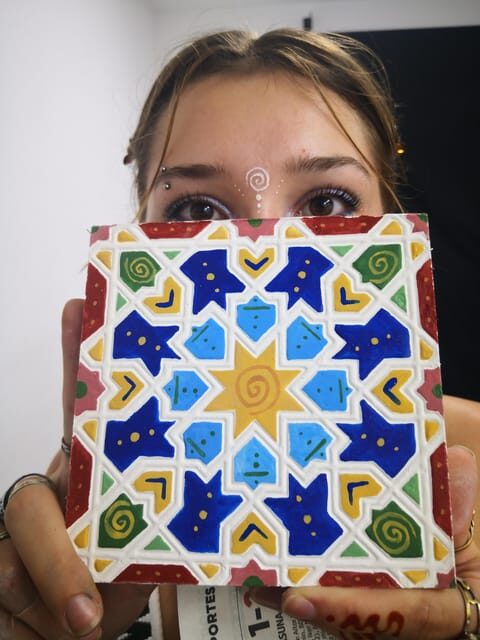
- Choose your craft from a dozen options, from mosaic to Nasrid tile painting to plasterwork and stucco.
- Take home what you make, so your souvenir has weight, texture, and real detail.
- Pro-level tools and materials are provided, including high-quality supplies for the piece you select.
- Learn techniques, not just decoration, including basic concepts of Arab ornament and marquetry.
- Small, hands-on guidance from an artisan specializing in Hispanic-Muslim craftsmanship.
- A relaxed, creative break that works well even after a busy sightseeing day.
Entering The Workshop Near Granada’s Cathedral
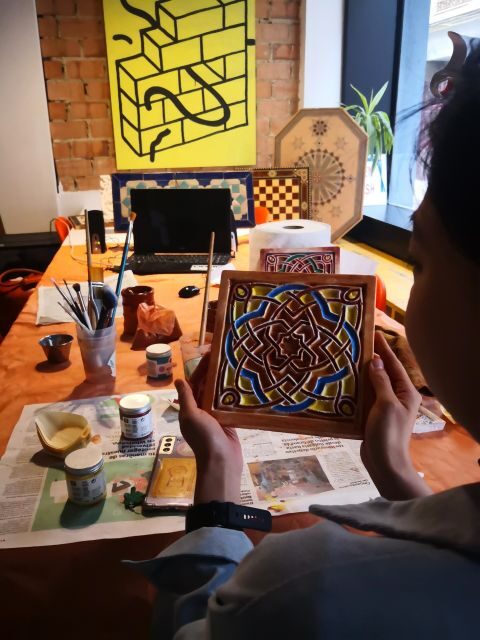
The experience starts in the Granada center at C. Horno de Haza, 29. You’ll meet inside the workshop, not outside on the street, which helps you find it fast once you’re there. The venue is described as a cozy art school, and that matters more than it sounds: you’re not wandering through a giant hall while trying to keep track of tools and choices.
Being close to the cathedral area also makes the timing painless. If you’re doing the Alhambra in one block, you still need something to balance it out. This workshop is the opposite pace: sit, make, focus, and get a craft souvenir that looks like it belongs in your home.
If you’re thinking about logistics, keep it simple. There’s no food or drinks included, and there’s no hotel pickup. Bring water if you tend to run warm, and plan to arrive a bit early so you can settle in without stress.
Other craft workshops & hands-on experiences we've reviewed in Granada
Pick Your Piece: Mosaic, Nasrid Tile, Gold-Leaf Plaster, Stucco, Marquetry
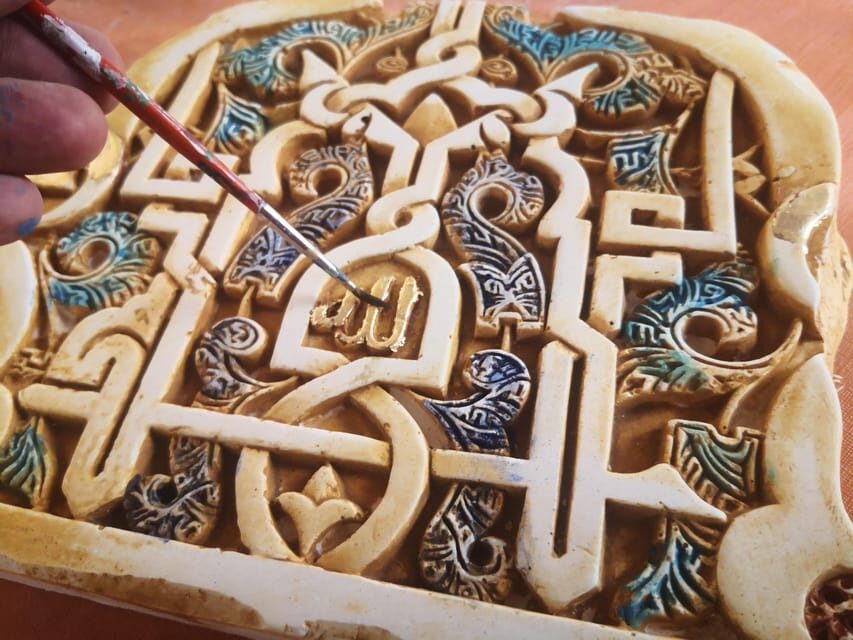
A big part of the fun is choosing what you’ll actually make. On the day of your workshop, you can select from a dozen pieces. That flexibility is useful because people often realize what they want once they see examples in person.
Here are the main options you can expect to choose from:
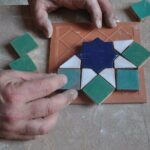
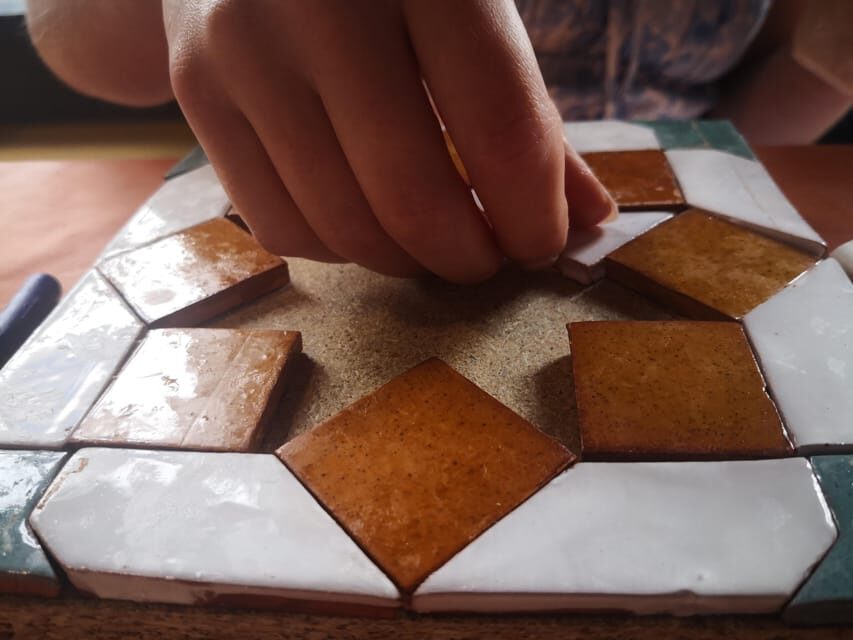
- An authentic mosaic tiled panel (mosaic as a craft system, not just a picture)
- Paint a Nasrid tile, giving you a taste of the design language used in Alhambra-era ornament
- Decorate a reproduction of the Alhambra in polychromatic plasterwork with gold leaf
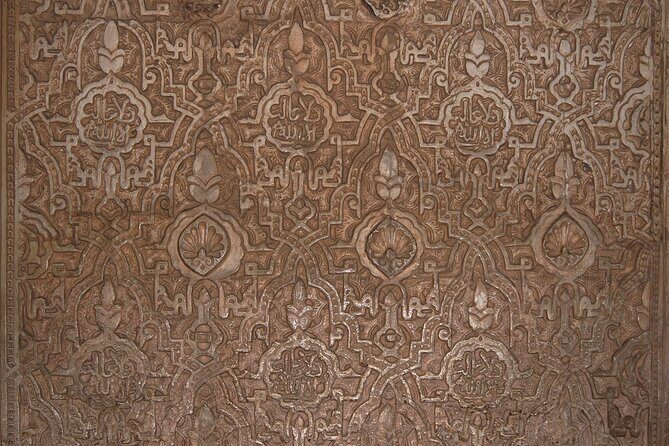
- Create your own stucco piece using the direct carving technique used in al-Andalus
- Build a chessboard, while learning basic concepts of Granadian marquetry
You might also see other options on offer, since the workshop notes many more choices. The practical takeaway: you can match the craft to your personality. Want something precise and pattern-based? Go mosaic or tile painting. Prefer something sculptural and hands-on? Look at stucco carving. If you’re drawn to detail and layers, gold-leaf plasterwork tends to be a strong choice.
How the 2-Hour Session Flows From Start to Finished
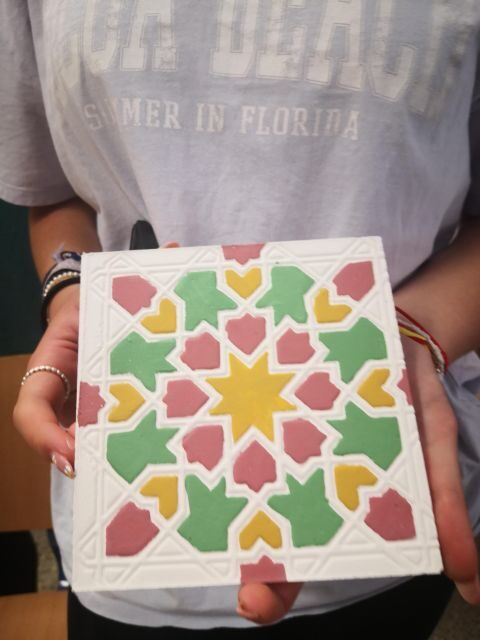
The workshop is designed to fit into a tight travel schedule: 2 hours of making, learning, and finishing. In that time, you’re not doing a slow art project that stretches for days. You’re building a piece step by step with guidance, then leaving with it done.
The day starts with meeting your artisan at the workshop. From there, you choose from the day’s available options and get oriented with tools and materials. You’ll learn the basics of Arab decoration, plus the specific technique for your selected craft.
Then it’s hands-on time. You’ll work directly with the materials, using the provided tools to create your piece. The workshop is built around the idea that you should feel like an artisan for the session, and the guidance is meant to get you there quickly without making it complicated.
By the end, you’re walking away with your own finished artwork. That take-home part isn’t a small detail. It’s the difference between doing something educational and doing something you’ll actually keep and show.
The chessboard add-on (glazing) is worth noting
If you choose the chessboard, there’s an extra note you should keep in mind. The chessboard can be glazed by the craftsmen for an extra charge. You’ll get information about that at the beginning of the activity, so you can decide then, not later.
What You Learn: Techniques Behind Alhambra-Style Ornament
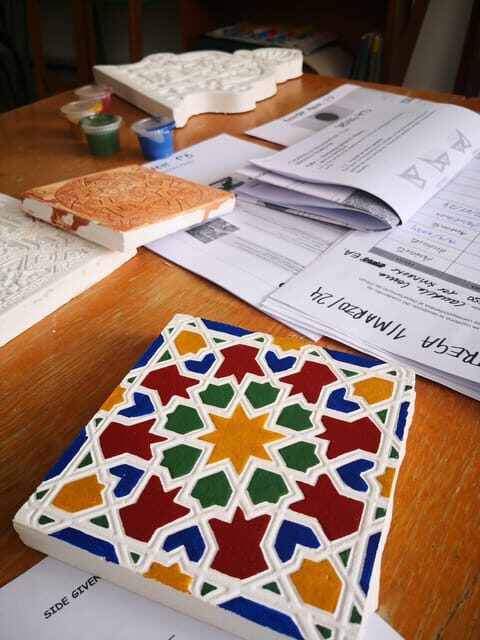
This workshop isn’t just about copying a decorative picture. It’s about understanding how the design and craft pieces fit together. You’ll start with the basics of Arab decoration, then move into technique-specific steps tied to your selected work.
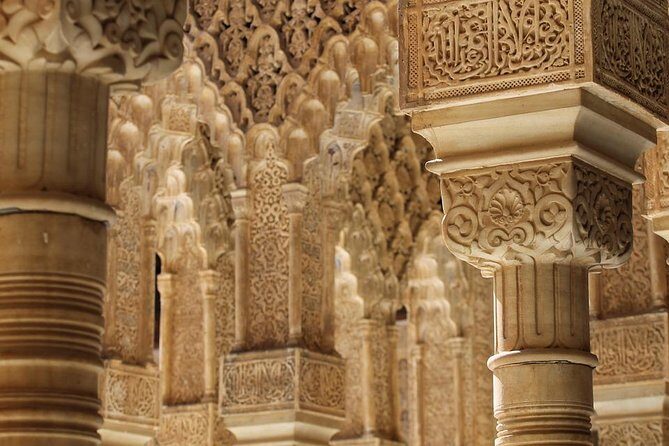
For example, mosaic and tile painting both train your eye for pattern and repetition. Stucco carving leans more into form and surface—how the carving creates depth, not just lines on top. Polychromatic plasterwork with gold leaf focuses on finishing and contrast, which is where the Alhambra look often gets its magic.
And marquetry is introduced through the chessboard option with basic concepts of Granadian marquetry. That’s especially valuable if you’ve seen wooden inlay work but never understood how the process thinks about layers and fit.
Even if you’re not an artist, you’ll leave with useful mental tools: how craftsmen translate ornament into steps, how designs behave when turned into materials, and how careful preparation changes the outcome. That’s exactly the kind of skill you can carry home and use again.




Tools, Materials, and the Surprise of How Relaxing It Is
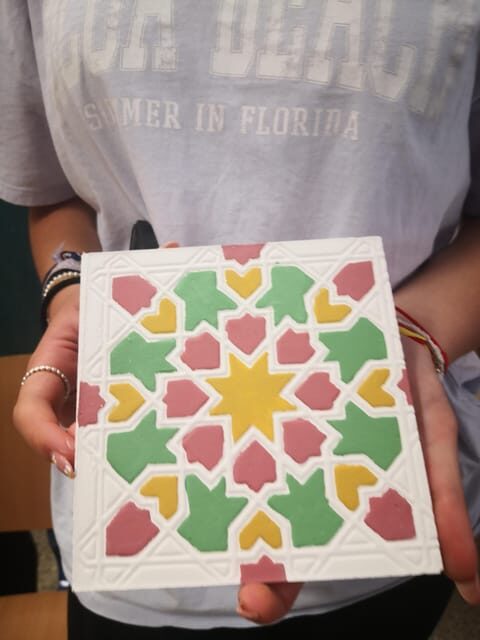
One of the most consistently praised parts is the atmosphere: people describe it as a calm, relaxing creative break, especially after a packed day. That fits with the workshop format. When you’re shaping a piece by hand, your mind shifts from checking sights to focusing on what’s in front of you.
Another highly praised element is the quality of the support. The artisan is described as kind and patient, with clear instructions. When the instructor is Frédéric/Fred, the feedback points to a teaching style that keeps things understandable while still encouraging creativity. That matters because crafts can get intimidating fast if the steps feel fuzzy.
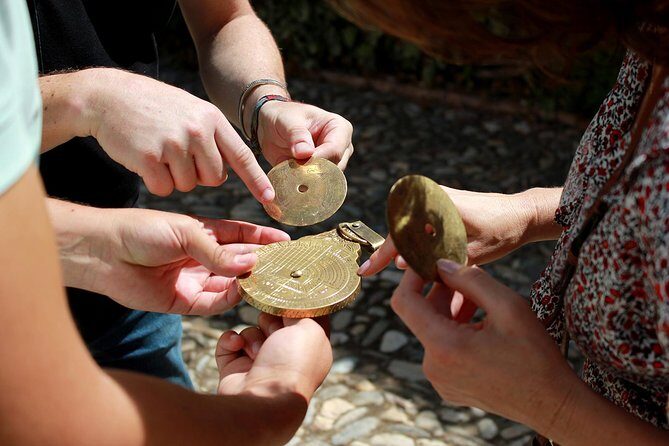
The workshop also provides the tools and materials you need. You’re not hunting down supplies or worrying about whether you’re using the right kind of adhesive, paint, or carving tool. You just show up and make. For your wallet, that’s part of the value. For your experience, it’s part of the ease.
Price and Value: Is 69 USD Worth It?
At $69 per person for a 2-hour workshop, the value comes from three things: guidance from an artisan, provided tools and materials, and the fact that you take the finished artwork home.
If you’re used to buying souvenirs in Granada, compare this to the usual pattern: you spend money on something decorative, then it sits in a drawer. Here, you’re spending money on a craft process and a final piece you can display. The materials are part of the price, and the instruction helps you actually finish something you’re proud of.
Also, it’s not a generic art class. The workshop is specifically built around Hispanic-Muslim craftsmanship and techniques linked to the Alhambra and al-Andalus design world. That gives it a tighter focus than a one-size-fits-all workshop.
Is it a bargain? It’s not trying to be the cheapest thing in Granada. But for what you get—two hours of guided craft and a take-home artwork—the price feels fair.
Who This Workshop Suits Best
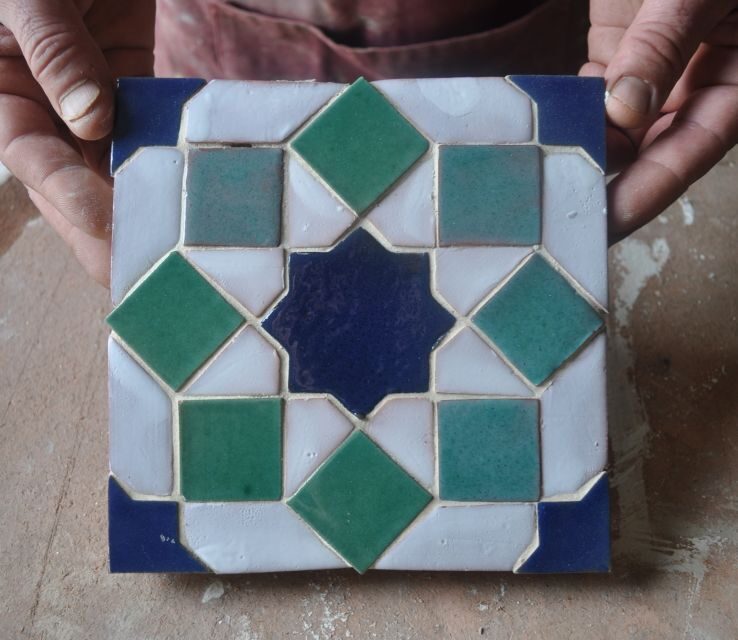
This is a great fit if you want a hands-on Granada moment that isn’t another walk, ticket, or waiting line. It’s also a smart choice if you like learning a skill you can point to later: this isn’t just entertainment; it’s making something physical.
It works well for:
- Families with kids 6 and up
- Adults who enjoy art and want an authentic technique-focused activity
- People who want a calmer afternoon between big sights
- Visitors who love the Alhambra look but want to understand the craft process behind it
It’s not a good fit if you need wheelchair access, and it’s not suitable for children under 6. If that applies to you, you’ll want to plan a different activity that matches your needs.
Small Practical Tips Before You Go
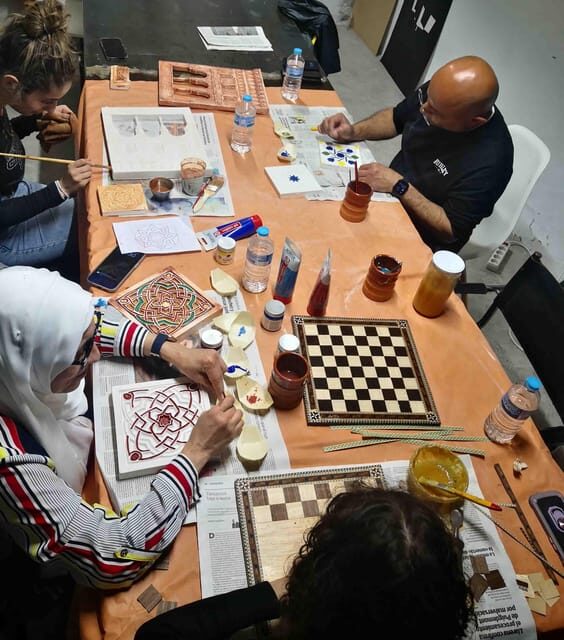
Wear something you’re comfortable getting a little messy in. Even when tools are clean and controlled, plaster, paints, and carving materials can be stubborn.
Take a moment to think about your choice before you decide at the workshop. If you’re short on patience, pick a project that matches how you work: mosaic and tile painting can feel more structured; stucco carving can feel more sculptural; gold leaf plasterwork can be detail-heavy; the chessboard option adds marquetry concepts.
Finally, since there’s no food or drinks included, time your workshop around a meal. A snack beforehand can help you stay focused for the full 2 hours.
Should You Book the Granada Alhambra Craft Workshop?
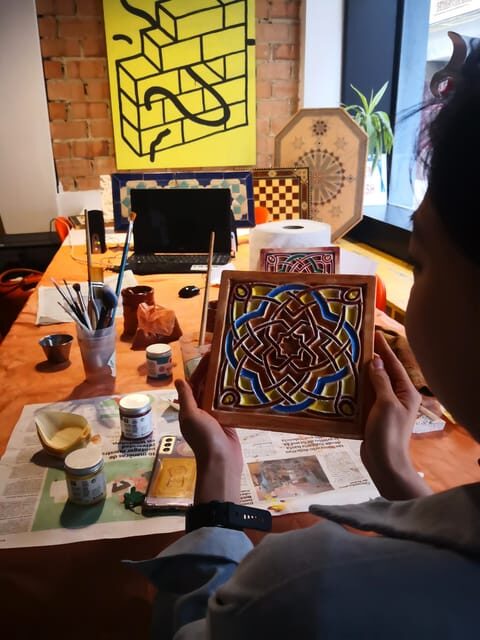
If you’re in Granada and want a souvenir with real craft behind it, I’d book this workshop. The best reason is simple: you leave with an Alhambra-style piece you made yourself, with artisan guidance and provided tools. It’s also a nice counterbalance to the big sightseeing energy of the city.
You might skip it if you’re mainly looking for a passive cultural activity, or if your group needs wheelchair accessibility or involves children under 6. But if you can participate physically and you like hands-on learning, this is one of those rare tours that doesn’t end when the session does.
FAQ
How much is the Alhambra’s Craft Workshop, and how long is it?
It costs $69 per person and lasts 2 hours.
Where is the meeting point in Granada?
You meet at C. Horno de Haza, 29. Look for the workshop location and go inside.
What kinds of crafts can I choose to make?
You can choose from a dozen pieces, including a mosaic tiled panel, painting a Nasrid tile, polychromatic plasterwork with gold leaf, a stucco piece using direct carving technique, and building a chessboard while learning basic marquetry concepts.
What’s included in the price?
The workshop includes an artisan specializing in Hispanic-Muslim craftsmanship, craft art materials and tools, a dozen pieces to choose from, a handicraft display, and the fact that you take home your own work of art. It also includes secrets and tricks of the pros and a fine arts venue location in central Granada.
Is hotel pickup or drop-off included?
No. Hotel pickup and drop-off are not included.
What languages are available for the instructor?
The instructor speaks English, French, and Spanish.
Is this workshop suitable for young children or wheelchair users?
It is not suitable for children under 6 and not suitable for wheelchair users.
How does the chessboard option work, and is there an extra charge?
If you choose the chessboard, it can be glazed by the craftsmen for an extra charge. You’ll get more information at the beginning of the activity.
What are the cancellation and pay-later options?
You can cancel up to 24 hours in advance for a full refund. You can also reserve now & pay later, keeping travel plans flexible.