REVIEW · GRANADA
Alhambra: tour with Nasrid Palaces. Admission not included
Book on Viator →Operated by Granada Turismo y Ocio · Bookable on Viator
One complex, many key rooms, all explained. This Alhambra tour ties the Nasrid Palaces to the fortress-city around them, with an official guide and an audio system to keep the details clear. I especially love how the walk spotlights the craft—like the stucco and the preserved wood ceiling work in the Comares Palace—and how it also gives you the city view side of the Alhambra at the Alcazaba. The main thing to watch is ticket math: admission to the Nasrid Palaces is not included, so you can’t just rely on a generic entry.
You also get a tight route that hits the Alhambra’s emotional center (Palace of Lions and Generalife) and then rounds out the story with the defensive Alcazaba and the 16th-century Palace of Carlos V. Expect a max group size of 30, English-language guiding, and a mobile ticket format. A drawback: it is not recommended for reduced mobility, since you’ll be moving through palace areas and sloped routes.
In This Review
- Key things to know before you go
- How this Alhambra tour fits into your day
- The ticket split that can make or break your visit
- Stop 1: Nasrid Palaces (the heart of the Alhambra)
- Comares Palace, Mexuar, and the Throne Room idea
- Palace of Lions: Sultan Mohammed V and the room names you’ll remember
- Partal area and Torre de las Damas
- Stop 2: Alcazaba for defensive structure and Granada views
- From palace power to fortress defense
- Torre de la Vela: why the tower placement matters
- Jardín de los Adarves and Puerta de las Armas
- Stop 3: Palace of Carlos V for a different architectural voice
- Stop 4: Calle Real de la Alhambra and the public spine
- Christian modifications you can actually spot
- Ruins of the Palacio de los Abencerrajes
- Medina: workshops and ovens for decorations
- Stop 5: Generalife for orchards, labyrinth gardens, and room-to-room flow
- Generalife Palace and its connection to the Alhambra
- Courtyards and the names to watch for
- Timing, group size, and what to expect from the guide
- Price value: what you’re paying for (and what you must budget separately)
- Who should book this tour
- Should you book it? My practical recommendation
- FAQ
- Is admission to the Nasrid Palaces included?
- What ticket do I need to access the Nasrid Palaces?
- How long is the tour?
- What language is the tour offered in?
- What’s included in the tour price?
- Where do I meet the guide?
- Where does the tour end?
- Is the tour suitable for people with reduced mobility?
- How many people are in the group?
Key things to know before you go
- Nasrid Palaces need a separate ticket: the tour price covers guiding, not the entrance to the palaces.
- You’ll learn why specific rooms matter: Comares Tower’s Throne Room, Palace of Lions spaces, and the Partal area stops are explained in context.
- Alcazaba adds payoff views: Torre de la Vela gives big sightlines over Granada, Albaicín, and the Vega de Granada.
- Generalife isn’t just pretty plants: you’ll connect the orchards and garden layout to how Nasrid life worked.
- Route ends near Carlos V: you finish at Palace of Carlos V on Calle Real de la Alhambra, which helps you plan your next stop.
How this Alhambra tour fits into your day
Alhambra is one of those places where a self-guided visit is possible, but a guided visit saves you time and stress. The trick is that the site is huge, and the meaning of each building gets lost if you just float from room to room.
This tour runs about 3 hours and keeps you moving through five major zones: Nasrid Palaces, Alcazaba, Palace of Carlos V, the covered public area along Calle Real de la Alhambra, and then Generalife. You get the big visual hits and the key explanations that make them click.
Price-wise, you’re paying $21.63 per person for the tour itself, and the guiding is included. The important add-on is the entrance ticket for the Nasrid Palaces: €19.09 per person for the General Alhambra entrance with Nasrid Palaces. In real-life terms, you should budget for both the guide fee and the palaces ticket, and you should buy the right one for your exact date.
Other Nasrid Palaces tours we've reviewed in Granada

The ticket split that can make or break your visit
Here’s the part that deserves your full attention, because it’s where people get burned.
This is a guided tour with no admission included. That means you must purchase a specific Alhambra entry ticket that includes the Nasrid Palaces. If you only buy a basic Alhambra ticket, you may be turned away from the Nasrid Palaces area at the entrance point.
I’ve seen the frustration firsthand in the form of costly mistakes: one visitor arrived with what they thought was enough, only to learn they needed a distinct palaces ticket. The result was a missed chance to see the rooms that this tour is built around, and the day felt wasted even though they could still enter other parts.
So do this:
- Buy the General Alhambra entrance with Nasrid Palaces ticket for your date.
- Double-check that your ticket includes entry to the Nasrid Palaces.
- Keep your mobile ticket ready for scanning at the start of the day.
If you get that right, the rest of the tour experience is smooth.
Stop 1: Nasrid Palaces (the heart of the Alhambra)
This is your main course: about 1 hour focused on the Nasrid court buildings, where Granada’s Moorish rulers shaped art, power, and daily life into architecture.
Comares Palace, Mexuar, and the Throne Room idea
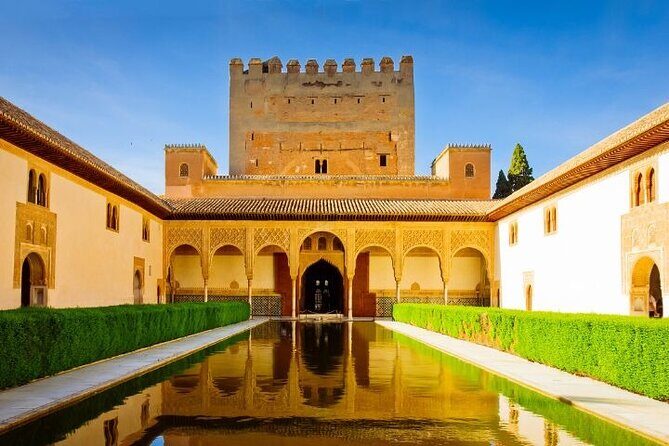
The tour starts at the Comares Palace plus the administrative area called the Mexuar. You’ll also see the Patio de los Arrayanes, known for its porticos and the long reflecting pool. The guide’s job here is to help you read the layout, not just stare at decoration.
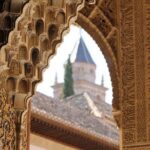
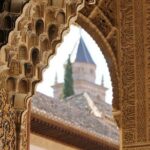
Then you move to the Comares Tower, which is where the Throne Room is located. The most compelling explanation angle is craft: you’ll hear about how stucco techniques were used and how the original wood ceiling work was preserved. That matters because it changes how you look. Instead of only noticing ornament, you notice engineering choices and how materials create that soft, controlled look inside.
Palace of Lions: Sultan Mohammed V and the room names you’ll remember
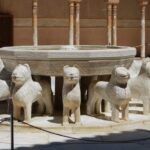
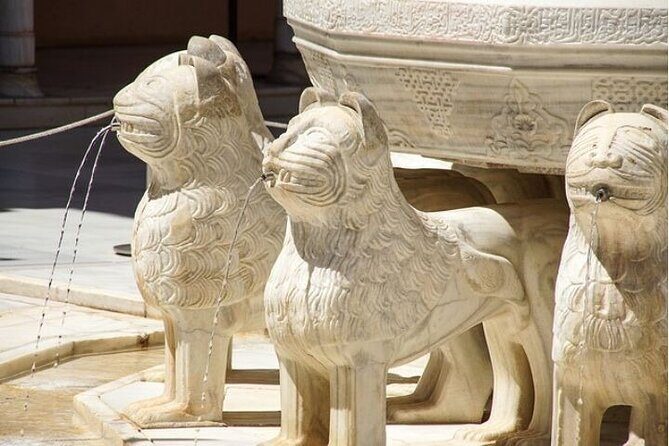
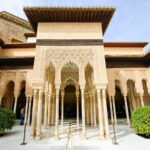
Next comes the Palace of the Lions, described as a work by Sultan Mohammed V. You’ll focus on the patio with the famous fountain, plus adjacent rooms like the Room of the Two Sisters and the Room of the Kings.
Even if you think you’ve seen photos, the real payoff is scale and grouping. These spaces feel composed. The guide helps you understand that this is not random luxury—it’s a system of water, light, and symbolism that signals authority while staying comfortable for court life.

Partal area and Torre de las Damas
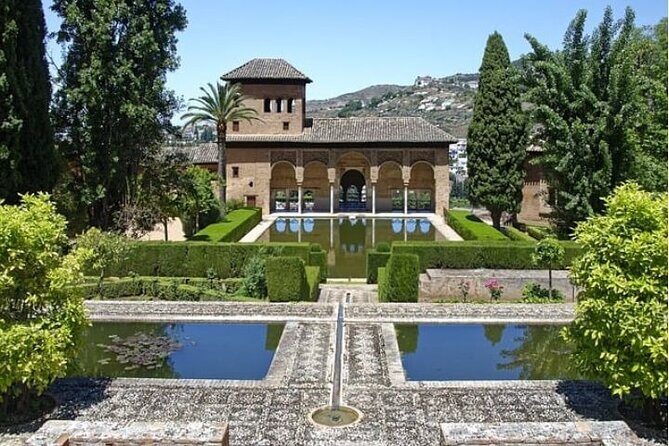
The tour concludes the Nasrid section in the Partal area and includes the Torre de las Damas. This is where you start sensing that the Alhambra isn’t one single palace. It’s a whole complex city where different zones connect through sightlines and walking paths.
Consideration: You’ll want to arrive rested. This area can involve small ramps and dense visitor flow depending on your time slot, and the tour pace is guided rather than slow.
Stop 2: Alcazaba for defensive structure and Granada views
After the palaces, you switch from court elegance to military logic at the Alcazaba, with 25 minutes of focused explanation.
From palace power to fortress defense
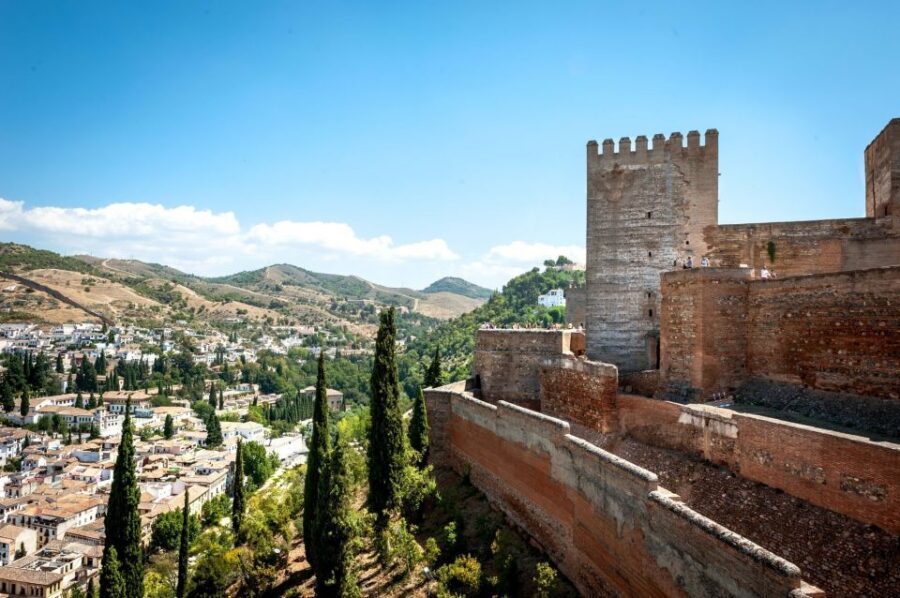
You’ll visit the military part and get explanations of defensive structure—how the palatine city of the Alhambra was protected, and why the layout makes sense.
Torre de la Vela: why the tower placement matters
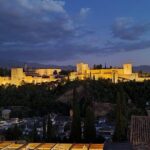
Then you go up to the Torre de la Vela to enjoy views over Granada, Albaicín, and the Vega de Granada. The guide talks about what the tower’s function was, and what changed during the Christian conquest.
If you’re someone who likes to understand a place through practical questions—how could it defend itself, where could guards see movement—this stop turns the Alhambra from pretty to believable.
Jardín de los Adarves and Puerta de las Armas
You’ll also visit the Jardín de los Adarves and the Puerta de las Armas. These sound like secondary stops, but they’re actually useful because they show how daily life and defense overlap. Think of it as the Alhambra’s working side: passageways, gates, and garden spaces inside a guarded system.
Consideration: If you struggle with slopes or long standing, this is the part where you might feel it. The tour is also explicitly not recommended for reduced mobility.
Stop 3: Palace of Carlos V for a different architectural voice

Only 15 minutes here, but don’t underestimate it. This stop is your reminder that the Alhambra doesn’t stop with Nasrid rule.
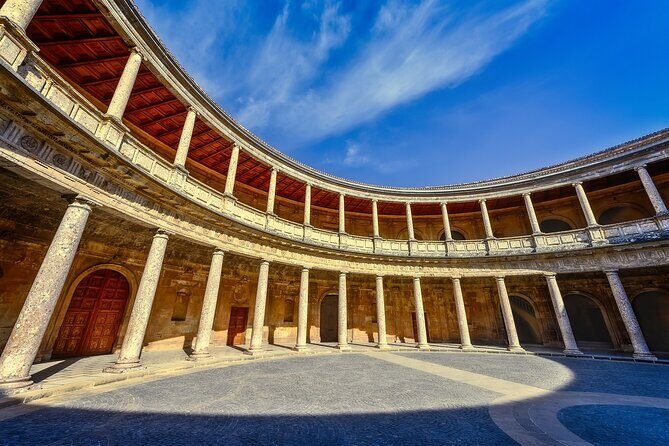
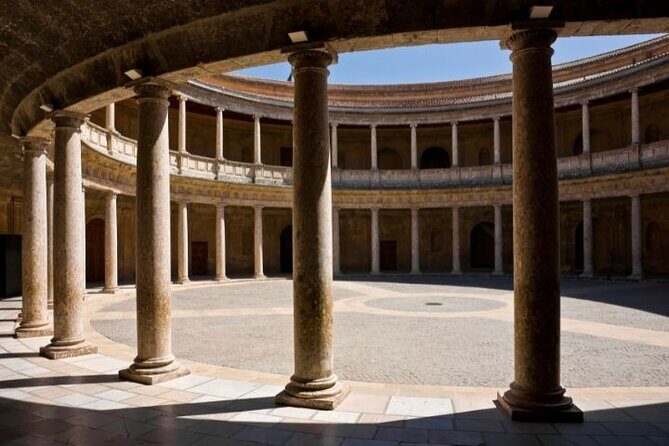
You’ll see the 16th-century Palace of Carlos V, with an explanation of its facades and main courtyard. The guide also covers construction ideas, symbolism, and points out where the on-site museums are located.
In other words, this is the “then what happened?” pause. You’ll leave with a better sense of the Alhambra as layered time—Moorish court spaces plus later European presence.
Stop 4: Calle Real de la Alhambra and the public spine
Next you walk along Calle Real de la Alhambra for 25 minutes. This is the public area where the guide explains how the city’s structure works—so you’re not just seeing buildings as isolated postcards.
Christian modifications you can actually spot
This stop includes Christian changes you can observe directly, including the church of Santa María de la Alhambra and the convent of San Francisco, which is now converted into a national hostel. The tour also notes the convent’s connection as the burial place of Queen Elizabeth.
Ruins of the Palacio de los Abencerrajes
You’ll also visit the area of dry land where the ruins of the Palacio de los Abencerrajes sit. Even as ruins, they help you understand how the Nasrid court’s famous families were tied to specific palace spaces.
Medina: workshops and ovens for decorations
Then you get to the Medina area with ruins of workshops and ovens—places where decorations were built. This is one of those details that changes your mindset. Instead of thinking of ornament as something applied at the end, you see it as a product of production and labor inside the city walls.
Consideration: Because this section is “explaining in motion,” it’s worth wearing comfortable shoes. You’ll cover ground between viewpoints and doorways even though the time is shorter.
Stop 5: Generalife for orchards, labyrinth gardens, and room-to-room flow
The final act is Generalife, about 45 minutes, and it’s the stop many people remember even if they only came for the palaces.
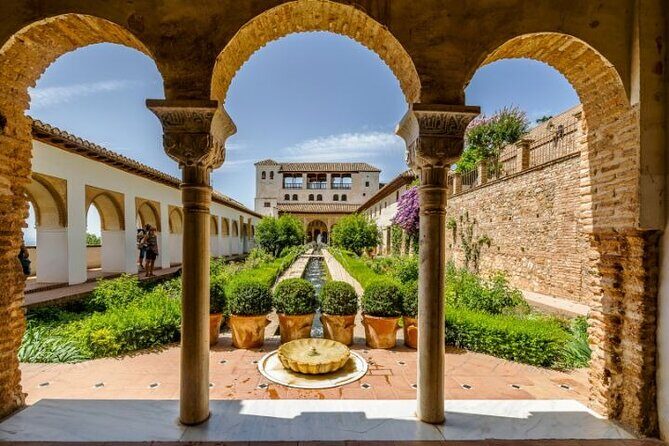
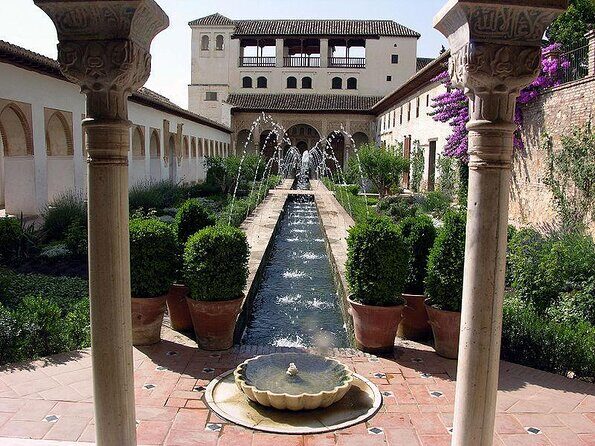
Generalife sits on the Cerro del Sol hill. You’ll see the Nasrid orchards and the Christian labyrinth gardens, with explanations of the flora and the fruits produced in the orchards. That plants-and-food angle is practical. It’s not just decoration. It’s a working landscape for a palace lifestyle.
Generalife Palace and its connection to the Alhambra
The tour also covers the Generalife Palace and its physical communication with the city of the Alhambra. You’ll learn why the “garden retreat” isn’t isolated—it’s linked to power and daily movement.
Courtyards and the names to watch for
You’ll visit a set of patios:
- Patio de Polo
- Patio de la Guardia
- Patio de la Acequia, where you can see the summer house of the Sultan
- Patio de la Sultana, known for the cypress and taller gardens
It’s a good way to end because it slows you down. Even if your mind is still sorting symbolism from the palaces, Generalife lets you absorb it through plants, water channels, and walking paths.
You exit the enclosure through the Paseo de las Adelfas.
Timing, group size, and what to expect from the guide
This is an English-language tour with an official tourist guide and an audio system. The group is capped at 30 travelers, which is large enough to feel social but small enough that you can usually hear explanations without yelling.
Tours are typically booked about 9 days in advance on average. So if you’re traveling in peak season or on a busy weekend, I’d plan earlier than you think you need.
The meeting point is at the Alhambra Meeting Point | Tienda de Souvenirs y Alhambra tours, P.º de la Sabica, 1, Local, Centro, 18009 Granada. You end at Palace of Carlos V, Calle Real de la Alhambra, s/n, Granada.
One more practical note: the start times and Nasrid Palaces timing can depend on the slot in the description, so read that carefully so you don’t show up for the wrong entrance window.
Price value: what you’re paying for (and what you must budget separately)
Let’s talk value in plain terms.
You pay $21.63 for guided interpretation and an audio system. If you’re the type who likes architecture explained in human language, that guide time is worth real money—because Alhambra details can feel overwhelming if you’re reading alone.
Then you add the required admission: €19.09 per person for the General Alhambra entrance with Nasrid Palaces. Once you account for that, your all-in cost becomes roughly your tour fee plus the palaces entry.
So is it a good deal? Yes, especially if:
- you want the Nasrid rooms explained,
- you value the Alcazaba view stop with historical context,
- you like the Generalife flow ending instead of rushing away.
If you already know the Alhambra well and prefer to go at your own pace, a self-guided strategy could be cheaper. But for most first-time or second-time visitors, this plan helps you see more with less confusion.
Who should book this tour
This works best for you if:
- you want a structured route that covers Nasrid Palaces, Alcazaba, Carlos V, Calle Real, and Generalife in one go
- you prefer guided explanations over reading walls
- you are okay with a moderate walking pace and a few stairs or slopes
It’s also a solid fit if you travel with a service animal (service animals are allowed).
It’s not the right choice if you have mobility limits. The tour is marked as not recommended for reduced mobility.
Should you book it? My practical recommendation
Book it if you’re aiming for the classic Alhambra arc in one session: court life in the Nasrid Palaces, defense logic in the Alcazaba, then the layered time jump with Carlos V, followed by the garden-living side of Generalife.
Don’t book it unless you handle the one critical task: buy the correct Nasrid Palaces admission ticket before your tour date. That’s the difference between a smooth guided visit and a day where you can’t enter the rooms you paid to understand.
If you can do that, this is the kind of guided Alhambra outing that turns photos into meaning fast—without requiring you to be an architecture student.
FAQ
Is admission to the Nasrid Palaces included?
No. This guided tour does not include admission. You need to buy an Alhambra ticket that includes the Nasrid Palaces.
What ticket do I need to access the Nasrid Palaces?
You’ll need the General Alhambra entrance with Nasrid Palaces ticket, listed at €19.09 per person.
How long is the tour?
The tour lasts about 3 hours.
What language is the tour offered in?
The tour is offered in English.
What’s included in the tour price?
The tour includes an audio system and an official tourist guide.
Where do I meet the guide?
You meet at the Alhambra Meeting Point | Tienda de Souvenirs y Alhambra tours, P.º de la Sabica, 1, Local, Centro, 18009 Granada.
Where does the tour end?
It ends at Palace of Charles V, Calle Real de la Alhambra, s/n, Granada.
Is the tour suitable for people with reduced mobility?
It is not recommended for people with reduced mobility.
How many people are in the group?
The tour has a maximum of 30 travelers.