REVIEW · MALAGA
Private Multiday: Cordoba,Granada, Alhambra & Seville from Malaga
Book on Viator →Operated by APARTRIP TRAVELS · Bookable on Viator
Three days, four tastes of Al-Andalus. I like how this private tour strings Cordoba, Granada, and Seville together with an expert guide and daily transport back to Malaga. It’s a clean way to cover the headline sights without the hassle of juggling trains, tickets, and meeting points.
What really makes it enjoyable is the personal attention you get at the monuments that can feel overwhelming on your own. One thing to consider: the plan is packed, with long sightseeing blocks and set tour timing, so you’ll want to be flexible if you’re hoping to add extra experiences in Malaga on top of the main tour.
In This Review
- Key highlights you’ll feel right away
- Why this Malaga-to-Cordoba-Granada-Seville route works
- Cordoba’s Mezquita and Patios: where you learn to see the details
- Granada’s Alhambra: how to focus so the palace doesn’t blur together
- Seville’s mosque-to-cathedral story, then the Alcázar of Mudejar art
- Your guide makes the difference (and names you might meet)
- Tickets, timing, and how to keep the days from overwhelming you
- Price and value: what you’re really paying for at $1,420.17 per person
- Who this private Andalusia art tour suits best
- Should you book? My honest take
- FAQ
- What time does the tour start?
- Is transport between Malaga and the other cities included?
- What language is the tour offered in?
- Are admission tickets included for the main attractions?
- Is this a private tour?
- How much free time do you get for lunch or exploring?
Key highlights you’ll feel right away
- Private group-only format with guides who focus on Andalusian art and history
- Mosque-Cathedral of Cordoba explained with the Eastern-and-Western design story in mind
- Alhambra + Generalife + Nasrid palaces timed with structured guide time and a lunch break
- Seville layers: mosque remains, Giralda minaret views, and Mudejar details at the Alcázar
- Mobile tickets and a plan that’s designed to keep you moving each day
- Small-group sweet spot (often best for 2–4 people) for a more relaxed pace
Why this Malaga-to-Cordoba-Granada-Seville route works

Starting from Malaga at 8:00 am, this tour removes the biggest stress point: getting yourself between cities. You’re not stuck working out logistics while also trying to enjoy Spain. You’ll have the comfort of pickup that’s adapted to where you’re staying, and then transport runs you between the main Andalusian stops and Malaga each day.
The second reason I like this format: it’s privately guided. The big sites—especially the Alhambra—are easier to understand when someone helps you “read” what you’re looking at. And since you’re with your group only, the pace feels more adjustable than big bus tours.
There’s a practical trade-off. This is a “hit the must-sees” trip, not a slow wander with lots of downtime. If you like long breaks and flexible pacing, you’ll need to treat free time as your recharge window, not an open-ended gap.
Other private tours we've reviewed in Malaga


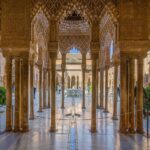
Cordoba’s Mezquita and Patios: where you learn to see the details
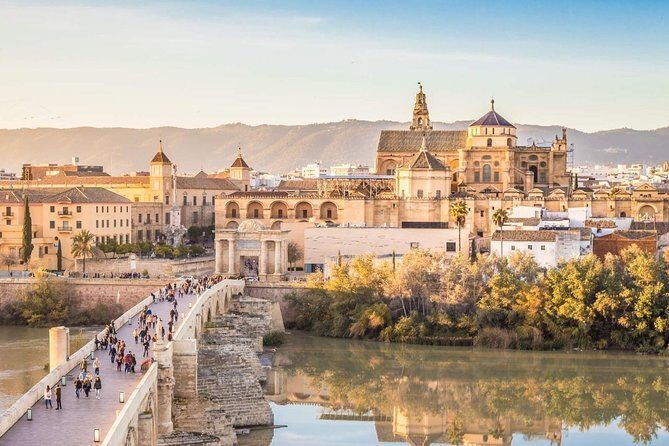
Cordoba is the kind of city where the narrow streets can make you feel like you’re stepping into another century. This day starts with the Judería district atmosphere—walkable, historic, and built for lingering. Then you get the signature stop: the Mosque-Cathedral de Córdoba, where the guide’s job is to connect the architecture to the bigger story of Al-Andalus.
What makes the Mezquita visit special isn’t just the scale. It’s how the guide helps you notice the design logic—where you can see the blend of influences and why the space feels so striking. You’ll have about 1 hour with the included guide time, which is just enough to get the overview without burning the day.
You also get flexibility with the museum option. There’s time to add an independent visit to either the Calahorra Tower Museum (history of Al-Andalus and the Muslim period) or the Sepharad Museum (Jewish history of Spain). This is a smart add-on because it turns the monuments you’re seeing into a broader context, especially if your group wants more than one lens on Cordoba’s past.
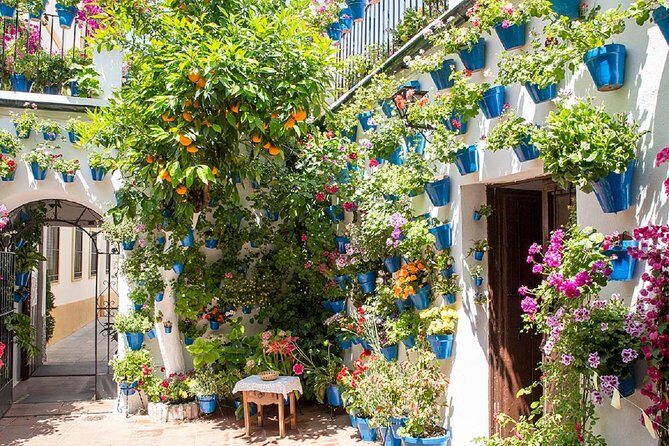
Then comes Patios de Córdoba, a different kind of Cordoba experience. Instead of monumental architecture, you’re seeing everyday beauty: courtyards with plants, color, and local pride. It’s a nice balance after the intensity of the Mezquita, and it gives your feet a break from the biggest interiors while still feeling culturally grounded.
Practical note for your day: you’ll have around 1.5 hours of free time for lunch or shopping. I’d use that time to eat somewhere close to where you’ll already be walking, so you don’t lose the momentum you worked for in the morning.
Granada’s Alhambra: how to focus so the palace doesn’t blur together
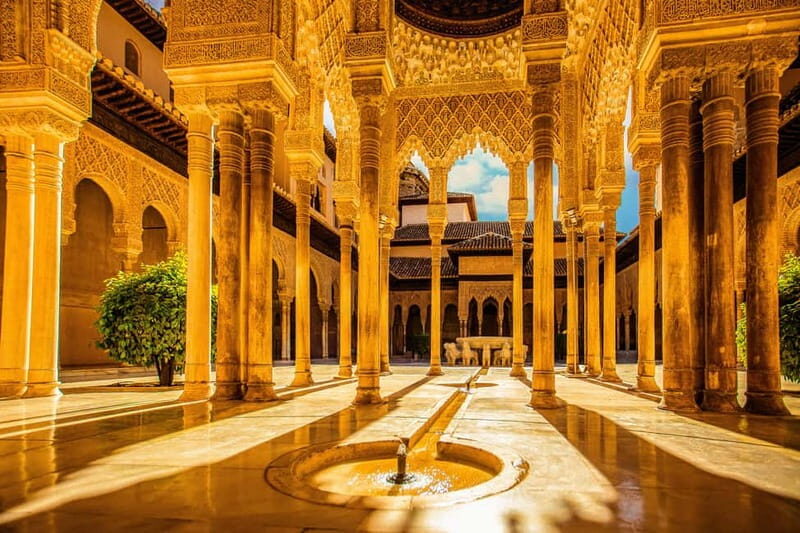
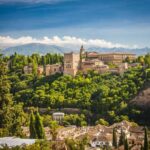
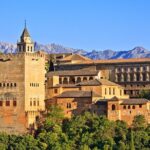
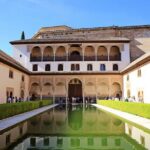
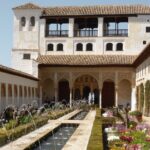
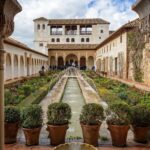
Granada is where Andalusian art can feel almost unreal—until you know what you’re looking at. This tour gives you structured time at the Alhambra Palace, including time for the Generalife and Nasrid palaces. You’ll also get a free chunk afterward to explore the city center on your own, which helps the day feel less rushed.
The guide approach matters here. This is one of those places where people often admire it, then move on. But when someone explains how the design reflects the reality of a besieged kingdom—how columns, stucco details, and Arabic calligraphy carry luxury through craftsmanship rather than materials—the visit clicks. You start noticing patterns and messages instead of just taking photos.
You’ll get about 3 hours of included time around the Alhambra complex, plus 1.5 hours of free time for lunch or independent exploration in Granada. That free time is not an afterthought. It’s where you reset—grab a simple meal, walk through a few streets, and let the palace details fade enough so the city itself can land.
If you’ve never been to the Alhambra before, here’s the mindset that makes it worth it: treat it like a sequence of “rooms with meaning.” Some sections will hit you visually right away, but others reward slower attention. A guide helps you decide where to spend your best energy so you don’t miss the most interesting symbolism.
One consideration: the Alhambra day can involve a lot of walking and standing. Even with a guide, you’ll want comfortable shoes and a bottle of water in your day bag.
Seville’s mosque-to-cathedral story, then the Alcázar of Mudejar art
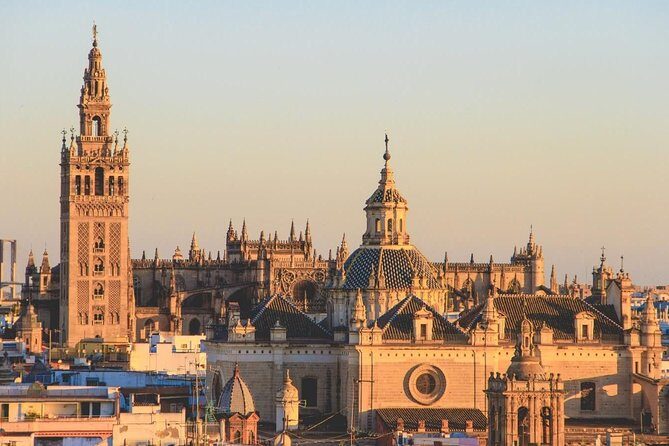
Seville is a master class in layers. You’ll start with the remains of the Umayyad Mosque of Abu Abbas, now part of the Church of El Salvador. From there you’ll walk through the city’s alleys to see the remains of an Almohad Mosque, where the Cathedral of Santa Maria was built—converted into what’s described as the largest Gothic cathedral in Christendom.
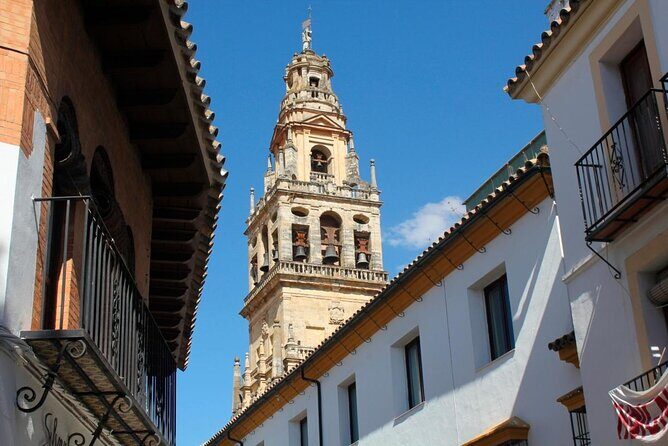
Then you get the big visual payoff: going up to see the Giralda. This bell tower is preserved from the original minaret tradition, which is exactly why it’s such a powerful stop. If Cordoba teaches you how architecture can merge cultures, Seville shows you how one era builds on top of another—and keeps parts of the earlier story visible.
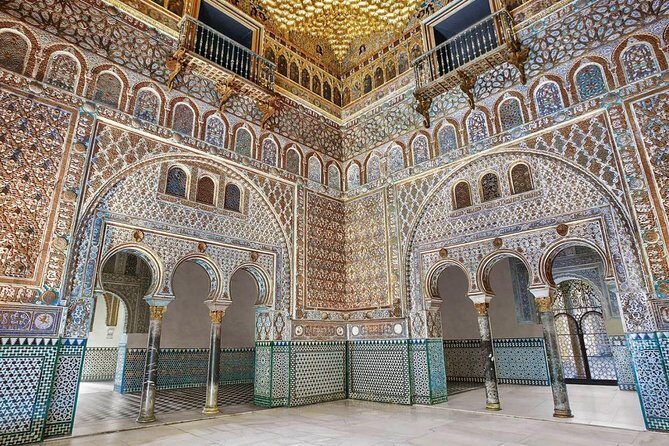
After that, the day continues with the Real Alcázar of Sevilla (Alcázar of the Christian Kings). This is where the tour shifts from Islamic-era remains to the later palimpsest—stone that carries traces of multiple periods. The highlight is the Palace of Pedro I, known for Mudejar art, reflecting Islamic master builder influence even centuries after the political changes in the peninsula.
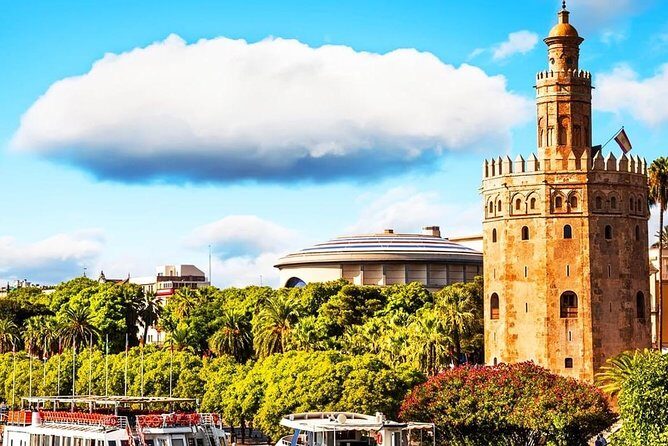
Then you finish with a panoramic component: the Torre del Oro, the Gardens of La Buhaira, and remains of the Arab wall. This mix is great for two reasons. You get interior artistry and exterior scale in the same day, and you also get a “breather” zone that isn’t a museum line.
From a comfort standpoint, the structure matters too. You’re scheduled for a long day in Seville, with ticket time built in for the cathedral and Alcázar. The tour also includes time after the morning visit to eat, so you’re not trapped in sightseeing without a reset.
My practical advice: Seville can feel hot and bright, even when the morning starts comfortably. Plan for sun and fatigue. If your group has one person who tends to get tired faster, they’ll benefit most from bringing a light layer and taking the free moments seriously.
Your guide makes the difference (and names you might meet)

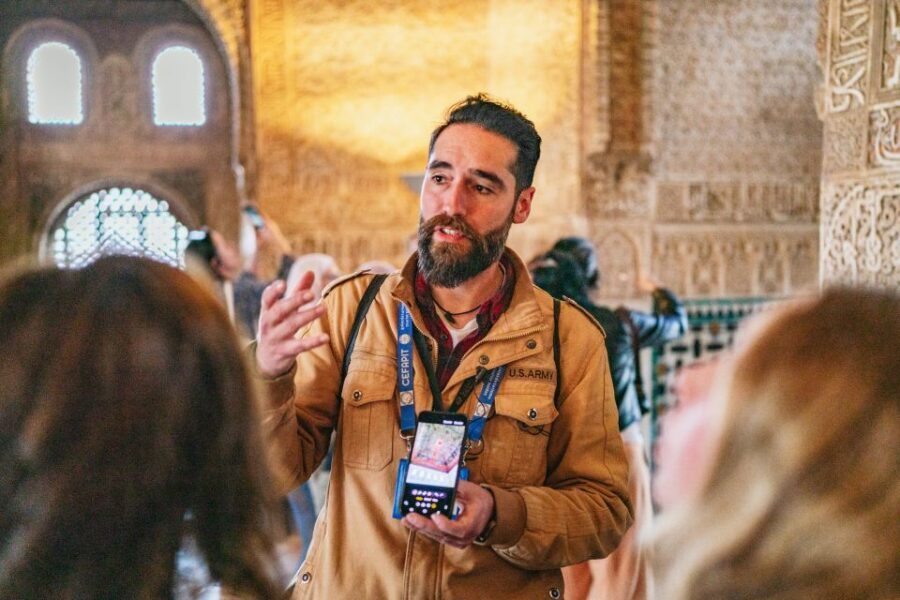
This tour’s standout ingredient is guide specialization in Andalusian art and history. In the real world, that’s what turns famous monuments into understandable places. You don’t just get dates; you get reasons—why a feature looks the way it does, what it meant, and how it fits into the bigger Andalusia picture.
The experience can also hinge on communication style and preparedness. In one example, a guide named Mohammed sent a message the night before and explained what to expect, helping people show up ready and relaxed. Another guide, Sarah, was described as a Seville native who genuinely takes pride in the city, which comes through in how she connects the streets to what you’re seeing.
For Cordoba, Hamdi was singled out for attention to detail and professionalism, while drivers like Kiko and Bienvenido were noted for making the rides smooth. Also worth mentioning: some groups reported using an air-conditioned van for the transfers, which is a real comfort upgrade when you’re moving between cities for long days.
You won’t always get the same person, but the guiding philosophy shows up: art-and-history framing plus friendly, clear explanations. That combination is exactly what helps you feel like you understood the Alhambra and the Mezquita, not just visited them.
Other day trips from Malaga & Costa del Sol we've reviewed in Malaga

Tickets, timing, and how to keep the days from overwhelming you
A private, multi-city trip lives and dies by timing. Here, the framework is built around included transport between each city and Malaga each day, plus mobile ticket delivery so you spend less time on logistics.
Admission tickets are explicitly included for major draws:
- Mezquita Cathedral de Córdoba
- Alhambra (including the Generalife and Nasrid palaces component)
- Real Alcázar de Sevilla and Seville Cathedral
There’s also that optional independent museum window in Cordoba (Calahorra Tower Museum or Sepharad Museum). That’s the kind of choice that keeps the trip from feeling one-size-fits-all.
The other timing win is the free time you’re given:
- Cordoba: about 1.5 hours for lunch or shopping
- Granada: about 1.5 hours for lunch or independent exploring
And Seville is structured as a long day with built-in meal time before the later sections.
To make this work for you, treat free time as a mini-plan. Pick a landmark you can reach easily, or reserve it for food and rest only. The tour covers major monuments; the free time is where you decide whether you want to add a few streets of local flavor or simply recharge.
One more thing: starting at 8:00 am means you’ll want an early night. This is not a late-morning kind of itinerary.
Price and value: what you’re really paying for at $1,420.17 per person
At $1,420.17 per person for an approx 3-day private experience, the honest value question is: what’s included, and what does that inclusion replace?
You’re paying for several things that add up fast if you do them yourself:
- Private guidance focused on Andalusian art and history
- Daily transport between cities and Malaga, handled for you
- Entry where it matters most (Mezquita, Alhambra, Alcázar, Seville Cathedral)
- A schedule that’s tight enough to cover a lot, but structured enough to stay comprehensible
If you’ve ever tried to self-plan the Alhambra alongside Cordoba and Seville, you know the effort can balloon. This price mostly buys you time and clarity. It also buys the comfort of not having to coordinate meeting points across multiple cities while juggling long sightseeing days.
Where it shines most is when your group size is small. One piece of practical advice that makes sense here is that groups in the 2–4 range tend to enjoy this kind of private format best, because you get the benefits of privacy without feeling like you’re carrying extra people’s pacing needs.
If your group wants a super flexible, slow, café-heavy trip, this price may feel steep for the level of structure you get. But if your goal is to understand and see the key Andalusian monuments with minimal hassle, it’s a strong value.
Who this private Andalusia art tour suits best
This is a great fit if you care about the art behind the architecture. If you want to walk through the Mezquita and understand why it works, or you want the Alhambra to feel like more than a pretty palace, the guide-led approach is exactly the point.
It’s also ideal if you’re traveling with limited time. Three days sounds short because it is. But the transport plan and included admissions mean you spend less time “figuring out what to do next.”
This tour may be less ideal if:
- you need lots of unscheduled downtime
- you prefer to move at your own pace without scheduled ticket time
- you’re chasing extra add-ons in Malaga that require extra coordination (the schedule can feel fixed)
Should you book? My honest take
I’d book this tour if your priority is major Andalusia landmarks with a strong guide and you want the convenience of Malaga-based pickup plus included transfers. It’s especially appealing if you’re the kind of traveler who likes to understand what you see—not just collect photos.
I wouldn’t book it if your travel style is slow, spontaneous, and flexible day-to-day. This is structured. You’ll get breaks, but you’ll also be walking a lot and sticking to set sightseeing blocks.
If you’re the right match, you come away with a real sense of how Andalusia’s story overlaps—Islamic architecture, later Christian additions, and the artistic threads that connect it all.
FAQ
What time does the tour start?
The tour starts at 8:00 am, with pickup details adapted based on where you’re staying in Malaga.
Is transport between Malaga and the other cities included?
Yes. Transport is included between each city and Malaga daily, so you don’t have to arrange intercity travel yourself.
What language is the tour offered in?
The tour is offered in English.
Are admission tickets included for the main attractions?
Yes. Admission is included for the Mosque-Cathedral of Cordoba, the Alhambra, and Seville’s Real Alcázar and Cathedral. You may also have an optional independent museum choice in Cordoba (Calahorra Tower Museum or Sepharad Museum).
Is this a private tour?
Yes. This is a private tour/activity, and only your group participates.
How much free time do you get for lunch or exploring?
You’ll have free time in both Cordoba and Granada: about 1.5 hours in Cordoba and about 1.5 hours in Granada for lunch or independent exploring.